The work
Service 08
Rod Bearings
BMW
BMW connecting rod bearing replacement in Ampelokipoi, Thessaloniki. Preventive care for BMW M and assessment of other BMW engines, especially before a significant power increase.
BEFORE STAGE 2 — Protect your engine before you increase its power.
Service at a glance
WorkConnecting rod bearings
VehicleBMW
Parts selectionEngine specific
Cost & timeAfter assessment
ELITE MOTORWORKS / BMW M
Preventive replacement of
BMW M rod bearings.
Connecting rod bearings support the connection between the connecting rods and crankshaft, allowing smooth movement with the correct oil film. Wear can lead to serious and expensive engine damage.
For BMW M engines such as S54, S63, S65 and S85, bearing condition deserves attention as part of long-term engine care. Higher power and torque, high engine speeds and hard driving can increase bearing loads.
We also assess BMW engines N63, N43, N47 and N57. The preventive replacement decision is based on the exact engine, mileage, use and service history, and is made before dismantling.
BEFORE STAGE 2 / ECU REMAP
A remap with worn bearings?
You're playing with fire.
Before a significant power increase, especially Stage 2, Elite Motorworks recommends assessing the engine and whether preventive bearing replacement is appropriate. If bearings are worn or replacement is indicated, address this before adding more load.
Correct prevention includes assessing the bearings and crankshaft journals, checking the specified clearances and following the assembly requirements for that engine. A remap cannot resolve mechanical wear.
Don't wait for noise or an oil-pressure warning. Early assessment can help avoid a much larger repair. Replacement is not automatically required on every BMW before every remap; the recommendation must fit the engine and its condition.
MODELS / MILEAGE
BMW M and other BMW engines.
When we recommend replacement.
We assess S54, S63, S65 and S85 BMW M engines, as well as N63, N43, N47 and N57. Model names alone are not enough: we confirm the engine using the production year and vehicle details.
| Engine | Example models | Mileage |
|---|---|---|
S54BMW M | M3 E46 Z4 M Coupé E86 | Every 80,000–100,000 kmElite Motorworks preventive replacement recommendation |
S63BMW M | M5 F10 / F90, M6 F06 / F12 / F13 X5 M / X6 M versions with S63 | Before 100,000 kmConsider preventive replacement, including unmodified engines |
N63Petrol V8 | 550i F10, 750i F01 / F02 X5 / X6 xDrive50i versions with N63 | Before 100,000 kmElite Motorworks recommendation, including stock engines |
S65 V8BMW M | M3 E90 / E92 / E93 | 100,000–130,000 kmIndicative planning for a first preventive replacement |
S85 V10BMW M | M5 E60 / E61 M6 E63 / E64 | 80,000–110,000 kmIndicative planning for a first preventive replacement |
N43Petrol | 318i / 320i E90 versions with N43 | Individual assessmentHistory, lubrication and initial diagnostic assessment |
N47Diesel | 318d / 320d E90 versions with N47 | Depends on the individual engineService history, use, mileage and initial assessment |
N57Diesel | 530d / 535d F10 / F11 M550d xDrive F10 / F11 versions with N57 | Approximately every 200,000 kmElite Motorworks recommendation, alongside timing chain work |
Elite Motorworks recommendations. The S54, S63/N63 and N57 mileage guidance reflects our own preventive maintenance recommendations. The S65/S85 ranges come from independent specialists and concern the first preventive replacement. The preventive replacement decision takes account of history, mileage and use, before dismantling. The subsequent measurements verify the clearances of the new bearings. These are not official BMW intervals or service-life guarantees; wear can occur earlier.
Twin- and triple-turbo N57: a particular priority
At Elite Motorworks, we consider planning preventive bearing replacement essential for twin- and triple-turbo N57 versions. We recommend replacement approximately every 200,000 km, alongside timing chain work, or earlier if history and inspection findings require it. Before an ECU remap that increases torque, we first assess engine condition.
What guides the decision
- The exact engine, service history and any previous bearing replacement.
- Track use, hard driving, lubrication and maintenance, plus existing or planned power upgrades.
- Initial diagnostic assessment and the owner’s requirements for the intended use.
Sources and origin of the recommendations
The S54, S63/N63 and N57 recommendations express the views of Elite Motorworks. The S65/S85 ranges are rounded conversions of Precision Sport Industries recommendations: 60,000–80,000 miles for S65 and 50,000–70,000 miles for S85. Evolve Automotive also describes S85 M5/M6 applications. N63/S63 applications appear in the King Engine Bearings guide. Lang Racing Development reports S63/N63 bearing failures and describes factory clearances as industry-standard. MAHLE explains the general mechanism of lubrication and bearing loads during restarts. These technical sources do not prescribe an S63/N63 or N57 replacement interval. The S63 case below is workshop material supplied by Elite Motorworks. Plastigauge describes its clearance-measurement method. The parts selections and S65/S63 case assessments shown here are supplied by Elite Motorworks.
OUR VIEW / S63 & N63
Preventive replacement.
Before 100,000 km.
Taking account of internationally reported S63 and N63 bearing failures, including stock engines, our view is that preventive bearing replacement should be considered before 100,000 km.
Bearing protection depends on an effective oil film and appropriate clearances. Repeated starts, including Start-Stop where fitted, can increase bearing loads while the lubricating film is re-established. This is a general wear mechanism that we assess alongside maintenance, use and the condition of the individual engine.
Before Stage 2 or another significant power and torque increase, we recommend assessing the engine and completing any indicated preventive work. Inspection of bearings and crankshaft journals, measured clearances and correct assembly are essential parts of the job.
ELITE MOTORWORKS / WORKSHOP EXAMPLE
S63 at 90,000 km.
With a good service history.
A BMW S63 engine with a good service history at 90,000 km, from an Elite Motorworks workshop case. The photos show the removed bearings, a crankshaft journal during inspection and a new bearing before installation.
Service history is an important part of assessment, alongside the actual condition of the components. Before tuning, this is a useful reminder to evaluate the engine rather than rely on mileage alone.
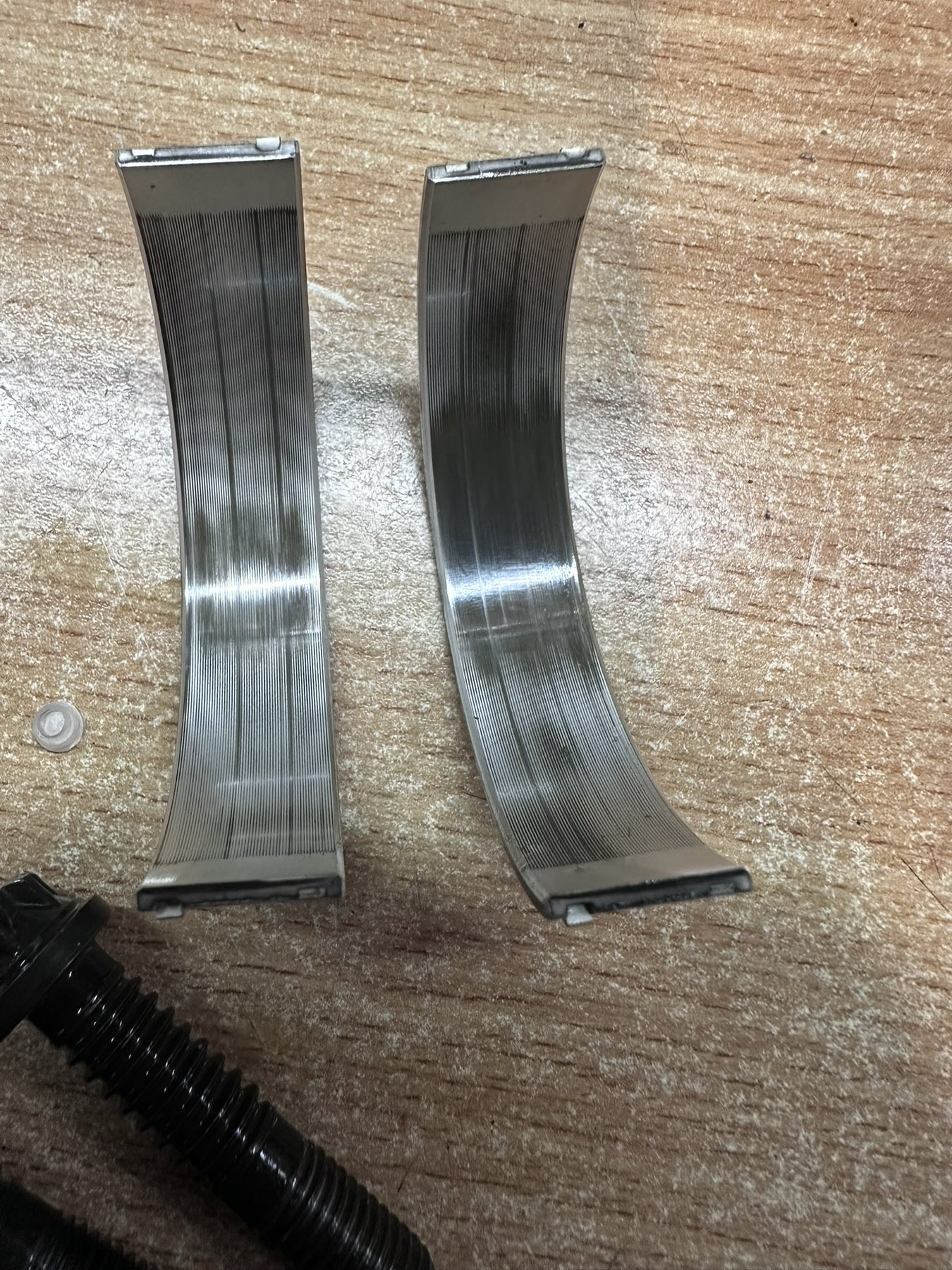
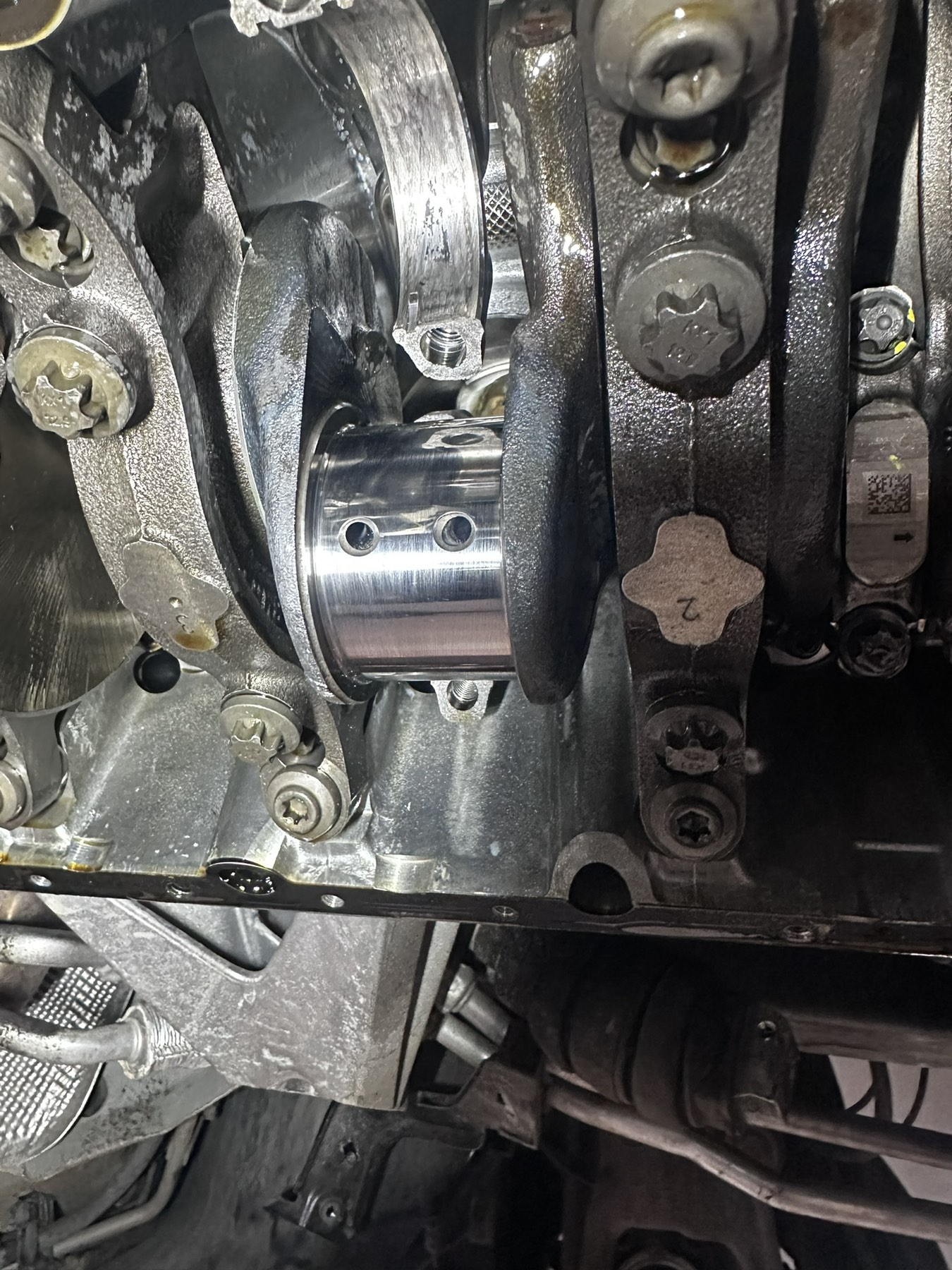
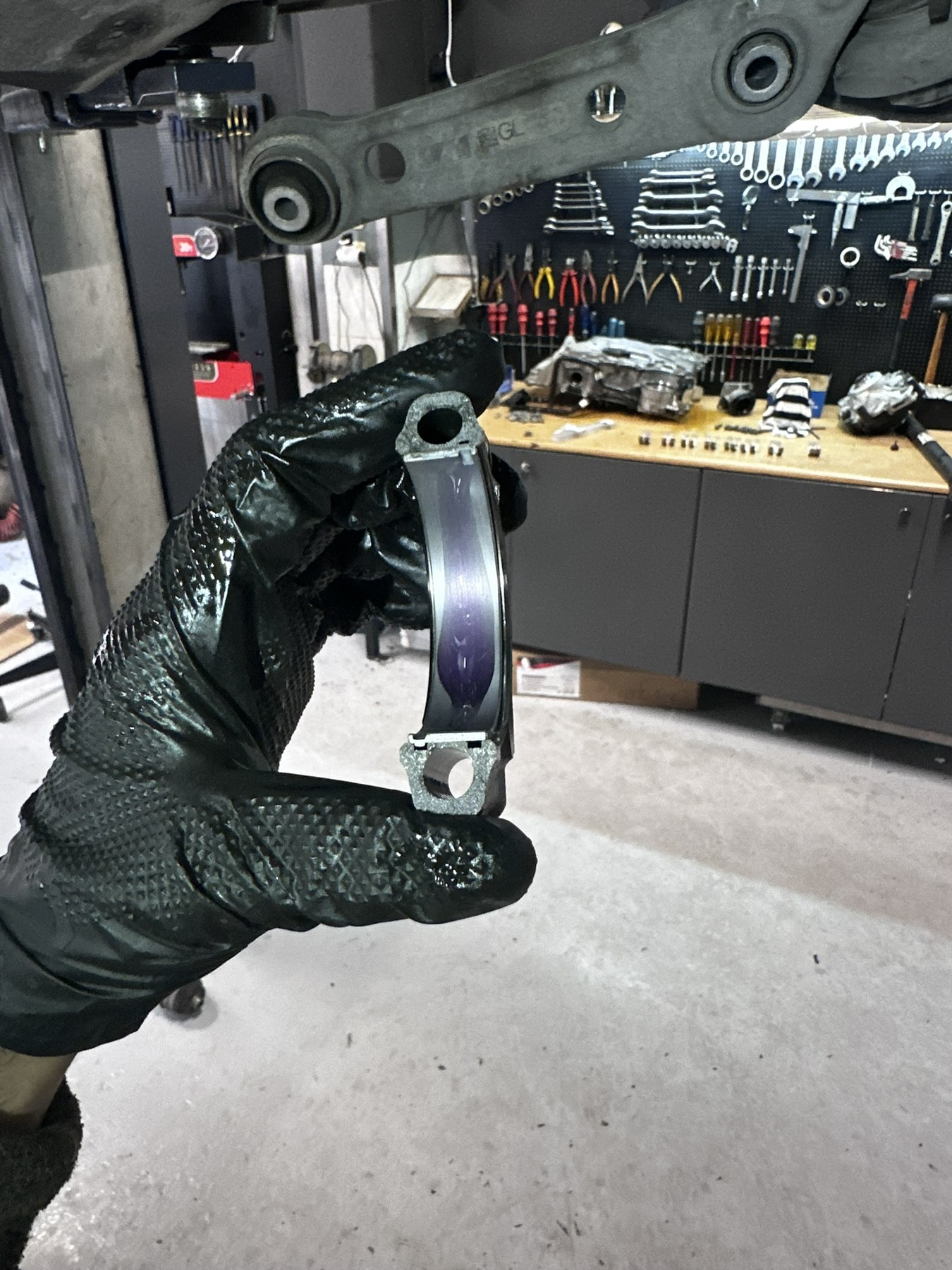
This S63 case at 90,000 km, with a good service history, highlights the value of early planning. Our recommendation is to consider preventive replacement before 100,000 km, with inspection and measurements on the individual engine.
ELITE MOTORWORKS / S65 WORKSHOP CASE
S65 at 110,000 km.
Wear reaching the copper layer.
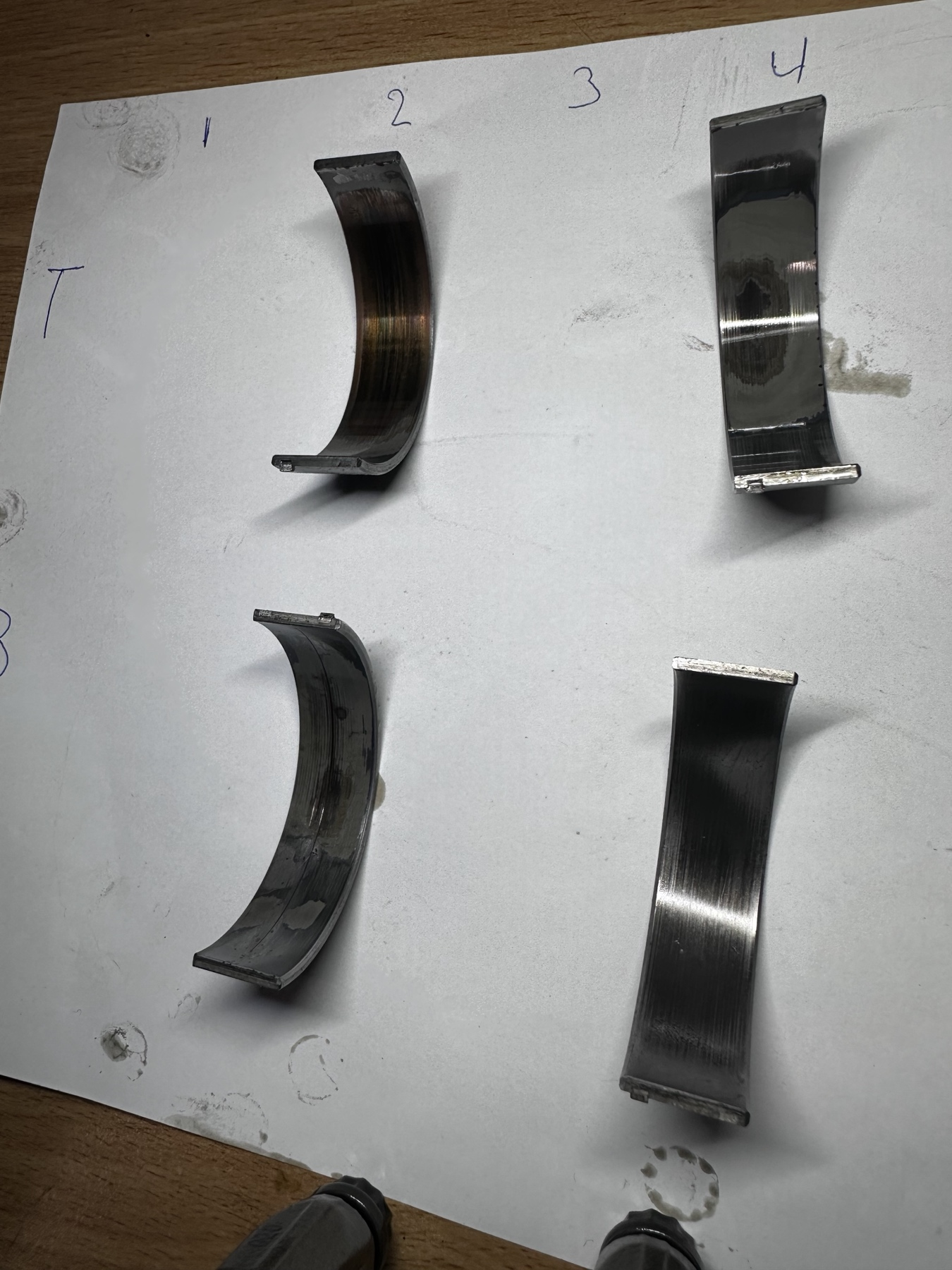
In this BMW S65 workshop case at 110,000 km, bearing wear had reached the copper layer. Elite Motorworks assessed this as advanced wear, close to seizure — the bearing picking up on the crankshaft journal.
This case highlights the value of timely preventive replacement. The work includes crankshaft journal inspection and clearance measurement and verification during assembly with the new bearings.
How we select replacement parts
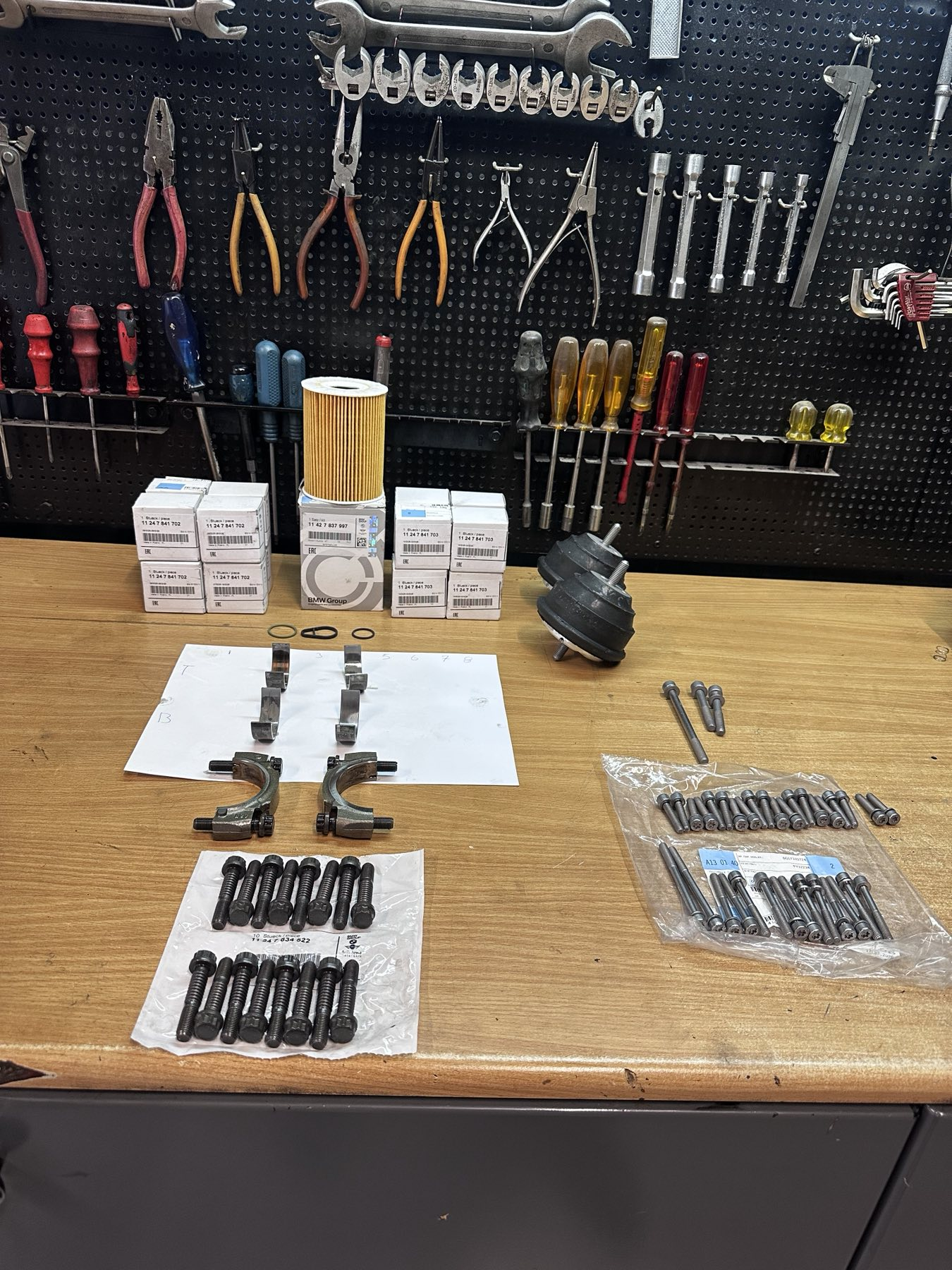
We select parts for each case according to the engine, measurements and owner’s needs. For this S65, we chose genuine BMW bearings of the updated specification for daily driving and occasional track days. Different uses or requirements are discussed with the owner after assessment.
ELITE MOTORWORKS / S63 BEFORE STAGE 2
Check the clearances first.
Then the remap.
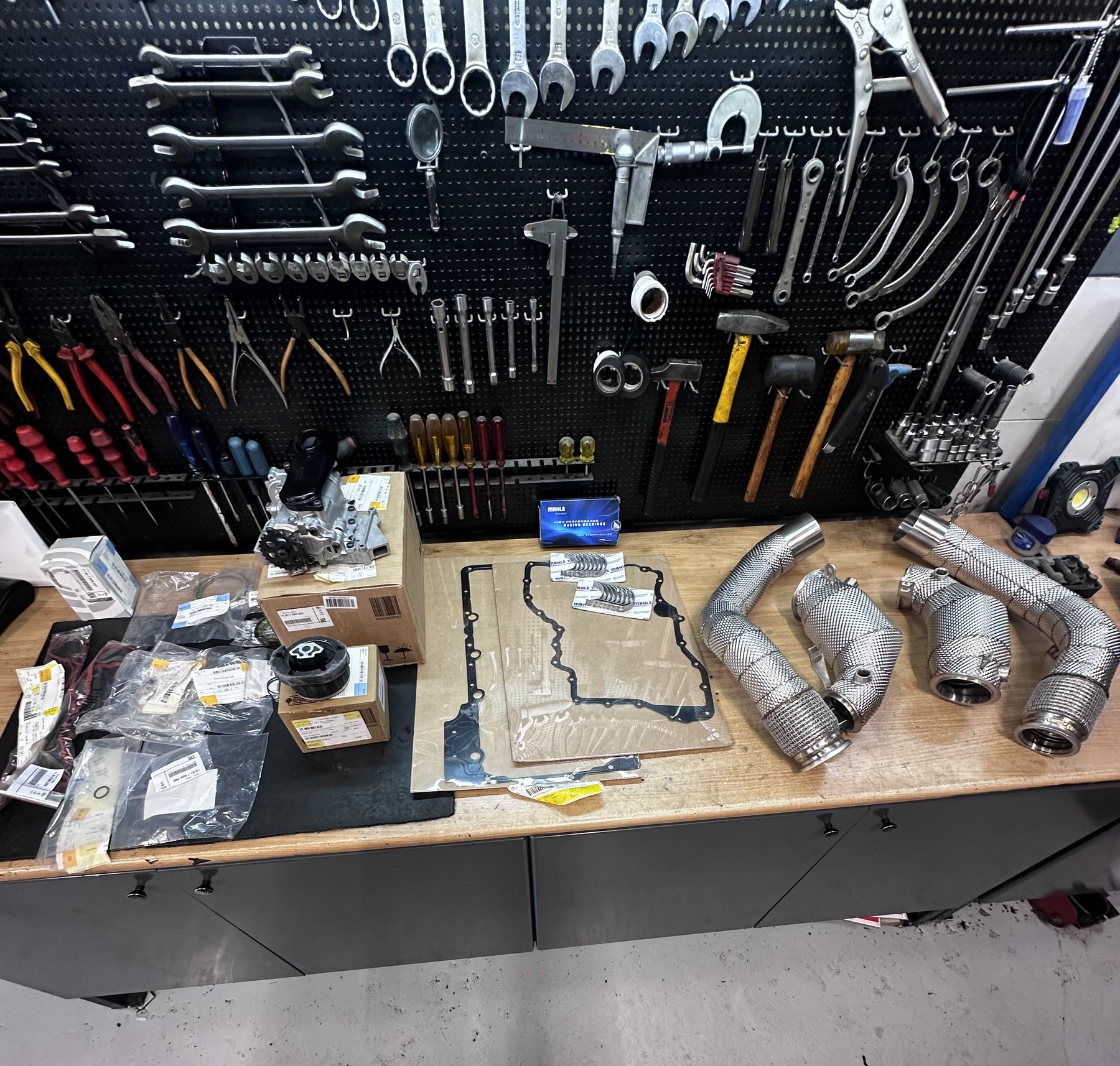
Parts are selected according to the customer’s needs and intended use. In this S63 Stage 2 preparation case, we selected extra-clearance bearings according to the build plan and intended use, before the ECU remap.
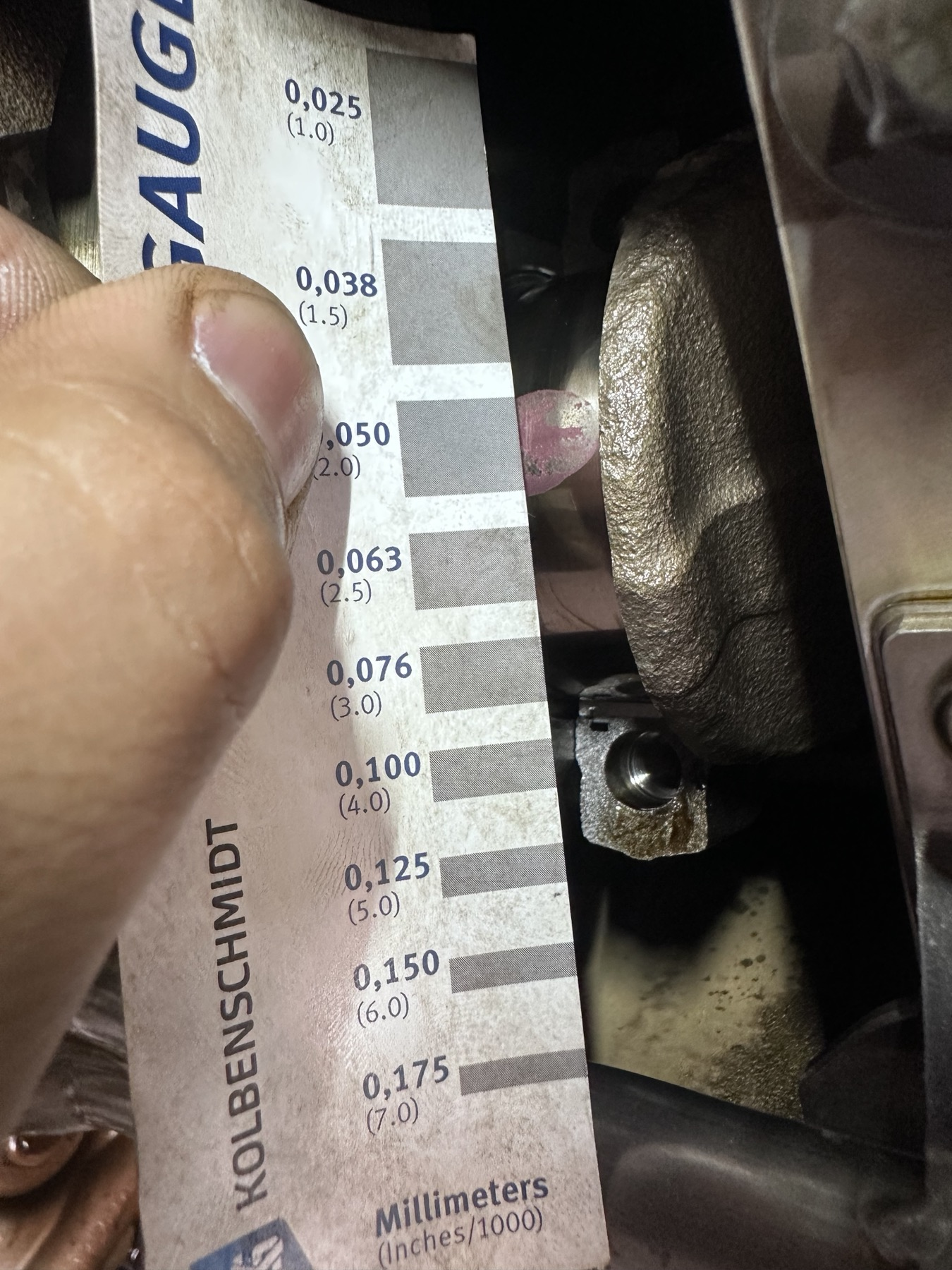
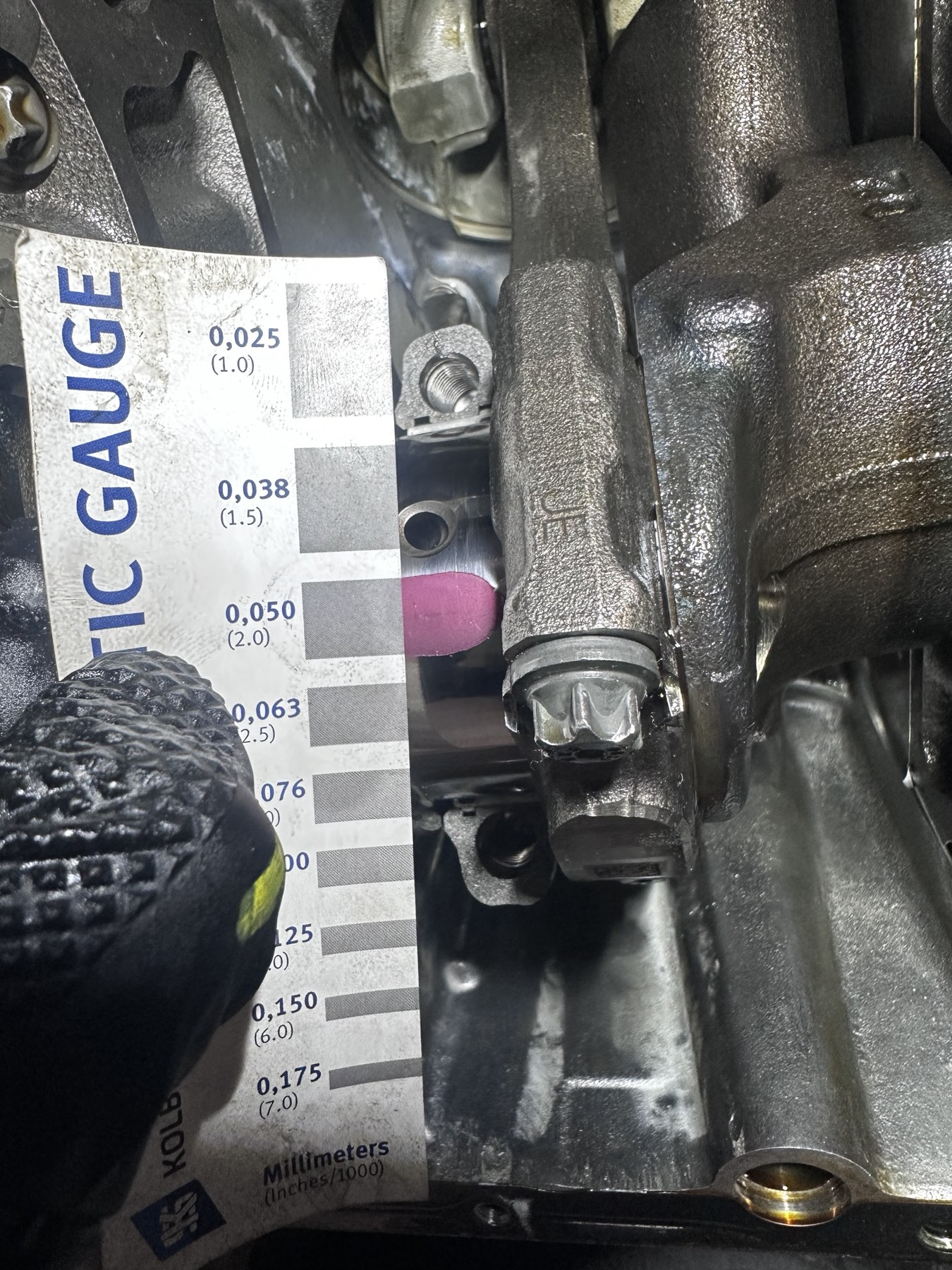
We measure the clearances during assembly and verify them with Plastigauge. Bearing selection and oil-clearance checks form part of preparing this individual engine before tuning.
- Initial assessment. We review the exact engine, mileage, service history, use, any symptoms and planned upgrades.
- Decision and planning. Based on the initial assessment, we agree the preventive replacement with the owner and select the appropriate parts. This decision is made before dismantling.
- Dismantling and inspection. We remove the old bearings and inspect their condition and the crankshaft journals. Any crankshaft damage determines additional work, which we discuss with the owner.
- New bearings and clearance verification. We replace the old bearings with the selected new parts. We measure the clearances of the new bearings and verify them with Plastigauge, following the requirements of the individual assembly for parts, fasteners and tightening.
- Final checks. We complete the checks after assembly and explain the work and engine-care considerations before tuning.
FAQ / BMW
Frequently asked questions
Which BMW engines do you assess for rod bearing work?
We assess BMW M S54, S63, S65 and S85 engines, as well as N63, N43, N47 and N57. Example models appear in the table. The exact engine, mileage, history and use guide the preventive maintenance recommendation before dismantling.
Must every BMW have new bearings before Stage 2 or a remap?
We recommend an initial assessment before a significant power or torque increase, especially Stage 2. The preventive replacement decision is based on the engine, mileage, history and use, before dismantling. Once the work is planned, the bearings are replaced and the clearances of the new bearings are verified by measurement. Replacement is not automatically necessary on every BMW before every remap.
At what mileage should rod bearings be replaced?
Elite Motorworks recommends considering preventive replacement for S63/N63 before 100,000 km, for S54 every 80,000–100,000 km and for N57 approximately every 200,000 km alongside timing chain work. N47 decisions depend on the individual engine, while N43 is considered individually during the initial assessment. Independent specialists suggest indicative first-replacement ranges of 100,000–130,000 km for S65 and 80,000–110,000 km for S85. These are preventive maintenance recommendations, not official BMW intervals. Condition, use and history may require earlier work.
What is the Elite Motorworks view on S63 and N63?
Our view is that preventive bearing replacement should be considered before 100,000 km, including stock engines. We take account of internationally reported cases and the need for effective lubrication, alongside history, use and measurements. Our S63 case at 90,000 km with a good service history highlights the value of early prevention.
What do you recommend for twin- and triple-turbo N57 engines?
At Elite Motorworks, we consider planning preventive bearing replacement essential for twin- and triple-turbo N57 versions. We recommend replacement approximately every 200,000 km alongside timing chain work. If history or findings require it, the work should be brought forward, particularly before a significant torque increase through an ECU remap.
Should I wait for noise or low oil pressure?
We do not recommend waiting for these symptoms before discussing prevention. Noise or an oil-pressure warning requires diagnosis and does not identify bearing wear by itself.
Which parts do you use for bearing replacement?
Parts are selected according to the engine, measurements, use and owner’s needs. In the S65 case at 110,000 km, we chose genuine BMW bearings of the updated specification for daily driving and occasional track days. In the S63 Stage 2 preparation case, we selected extra-clearance bearings before the ECU remap, measuring and verifying clearances with Plastigauge. The appropriate choice for your car is determined after assessment.
When is preventive replacement agreed?
The decision is made during the initial assessment, based on the engine, mileage, history and use, before dismantling. Once we proceed with the planned work, the old bearings are replaced. Measurements and Plastigauge verify the clearances of the new bearings during assembly.
How much does the work cost and how long does it take?
Cost and time depend on the engine, access, parts and inspection findings. Send the model, year, mileage, engine code if known, and details of existing or planned upgrades for an assessment.
EXPLORE MORE